phonetic visualization

every word
has a shape

Type a word, or several. Watch lines trace paths through distinct and fundamental sounds of speech.

try it free how it works
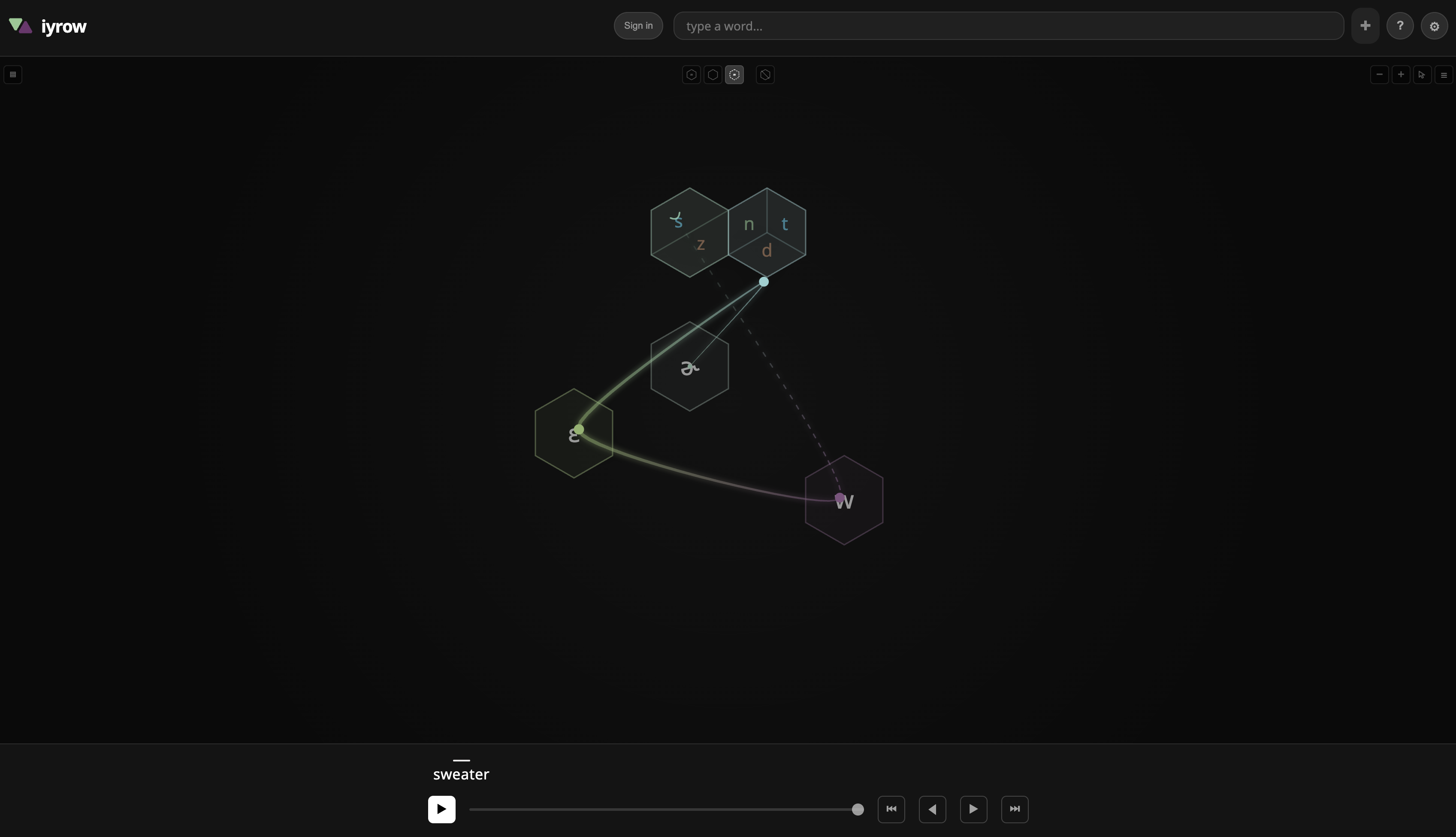
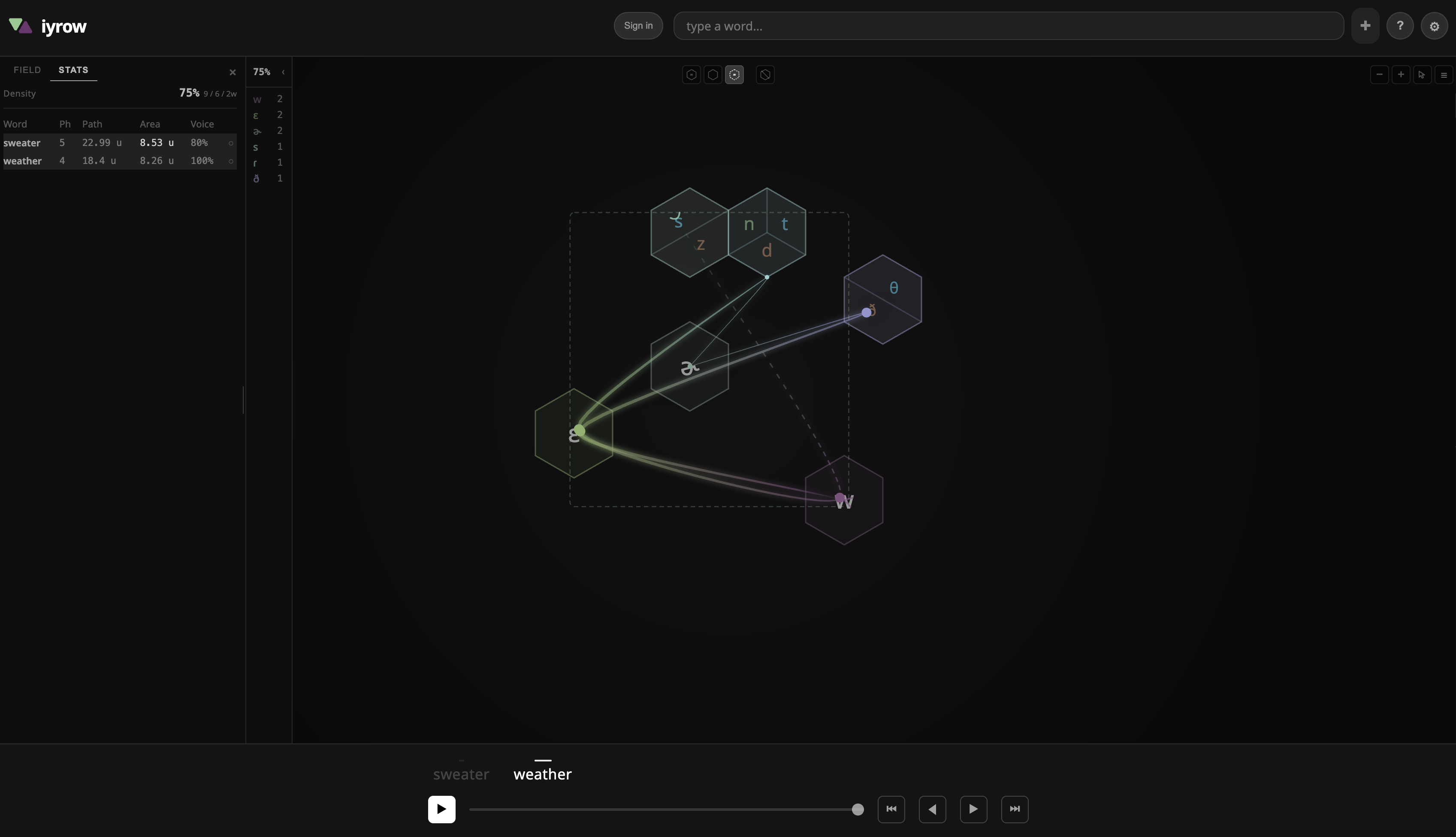
canvas view — sweater and weather overlaid on the phoneme grid
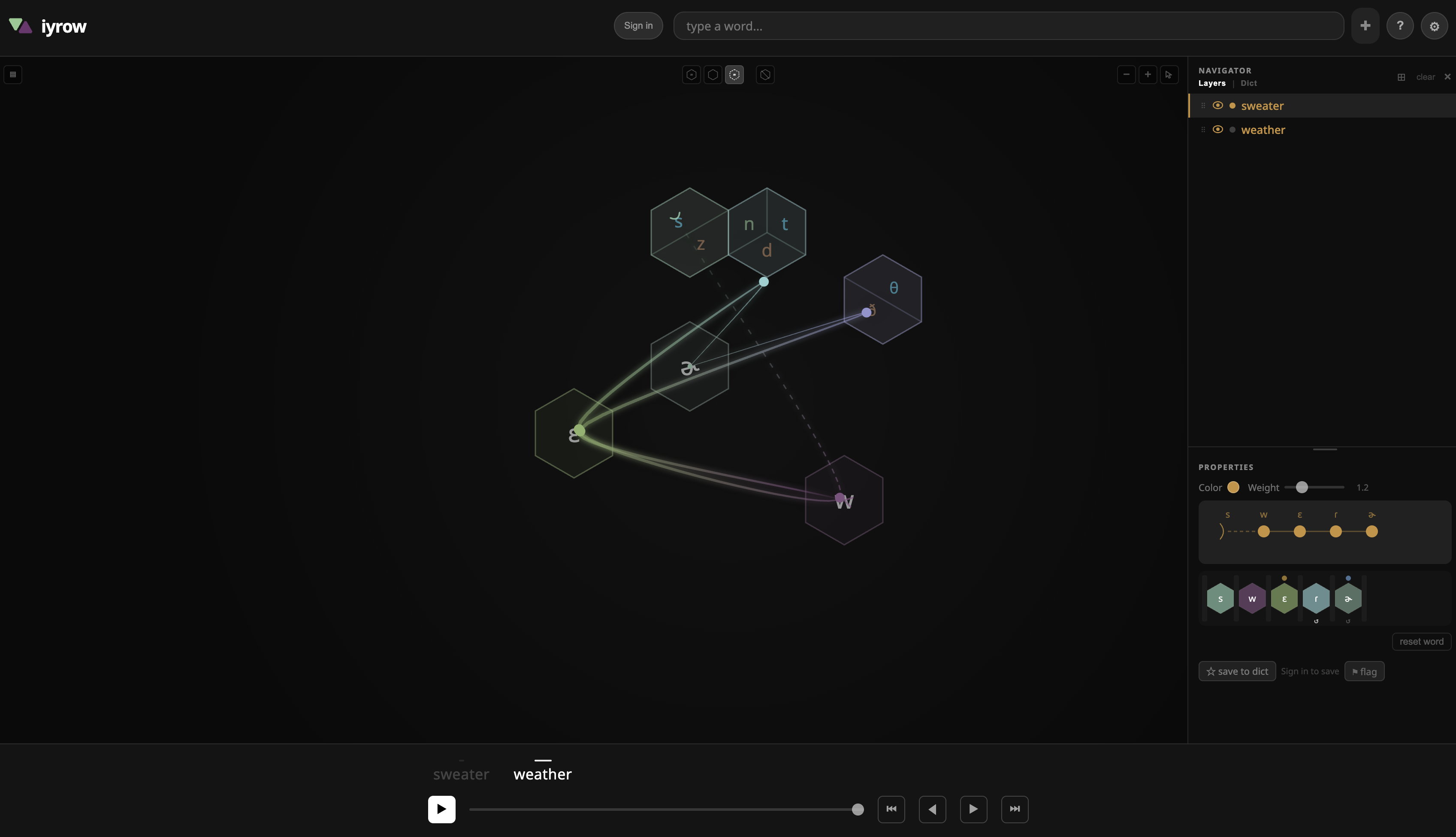
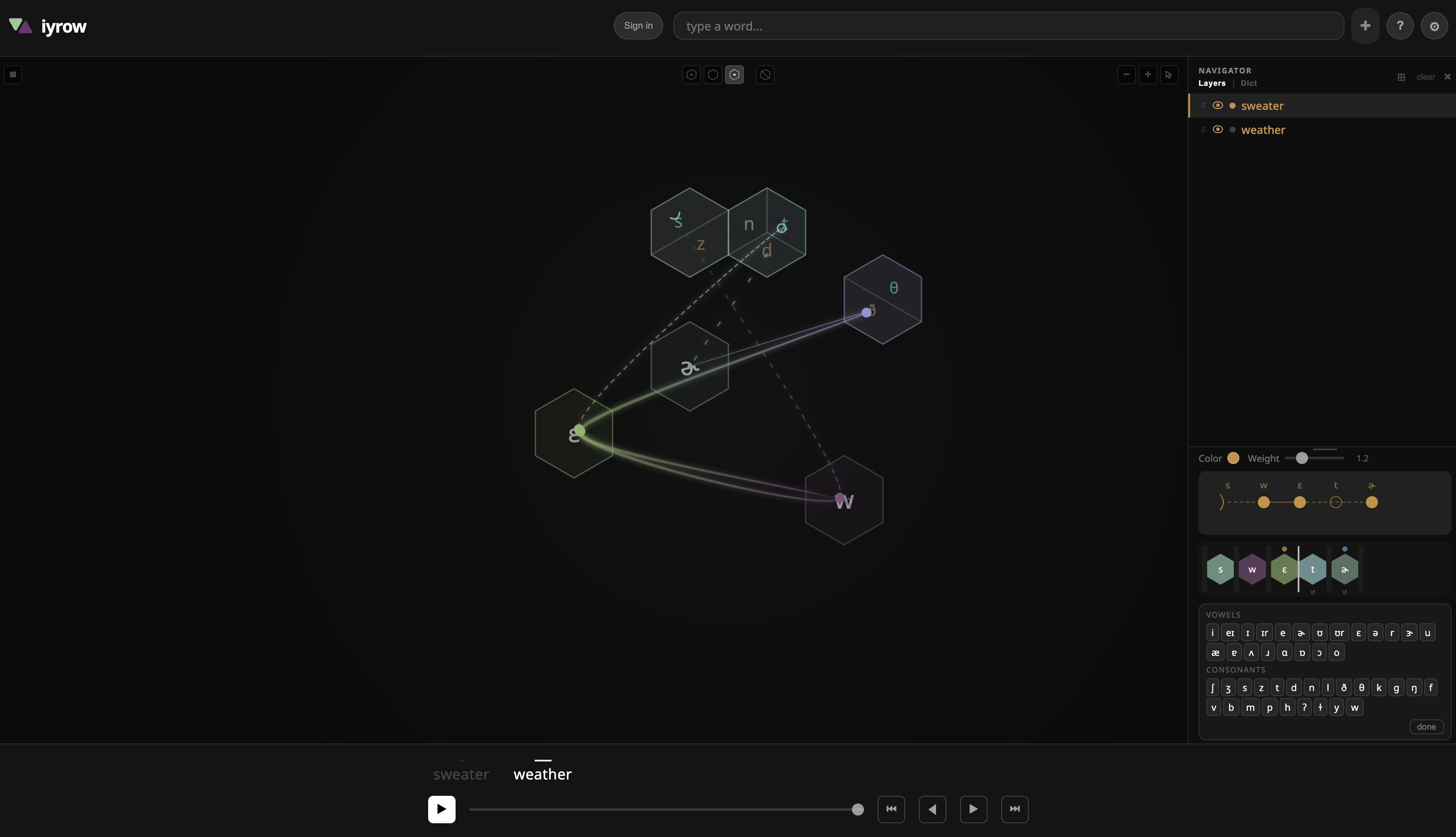
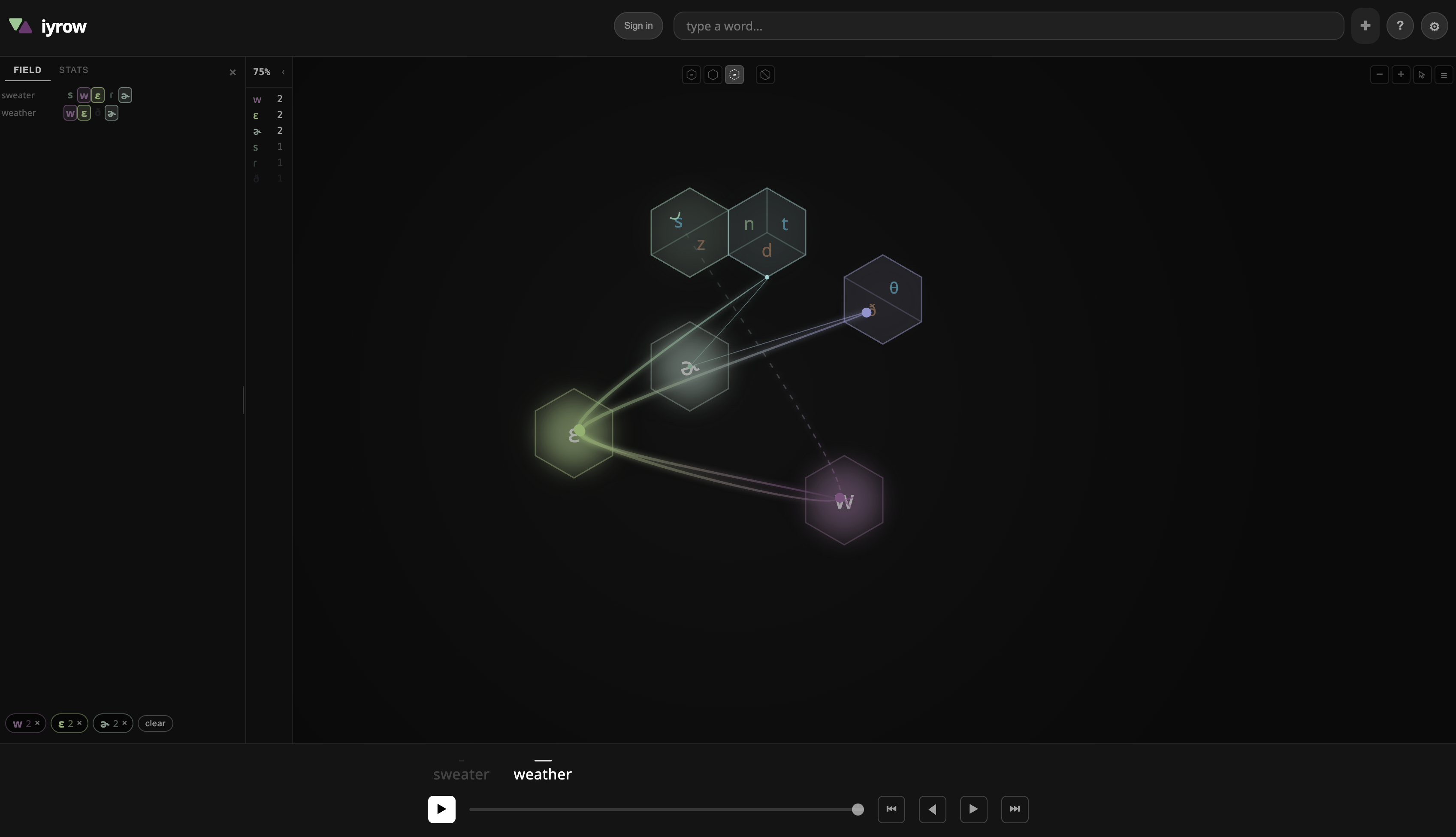
Each input word is drawn as a path through a grid of positions. Adjacent hexes require only small articulatory adjustments to reach; a slight shift of tongue, jaw, or lips. The shape of the path is relative to the articulation of the word. The navigator lists each input word on the canvas. Click a word to select, solo a word to isolate, turn words on/off with the eye icon. Layers can be reordered, hidden, grouped, or compared all at once by soloing a word then turning on other word layers. If the initial transcription does not match how you say a word, you can edit it. Toggle stressed and unstressed syllables, choose the intended phoneme, or use the flip arrow to flip to common alternatives. The path updates immediately. The field panel displays every distinct sound across all input words. Hover a phoneme to see how often it appears and where it sits on the grid. Click to accumulate selected phonemes. Per-word measurements: articulation path length, articulatory area, voicing ratio. Select a run of words to see combined stats and inter-word coarticulation. Phoneme density scores how concentrated the vocabulary is, in terms of repeated phoneme use/total phoneme use.
what you can do

Compare Words

Layer multiple words on the same grid. See where sounds overlap, diverge, or echo across a phrase or poem.

Edit to Your Pronunciation

If the transcription doesn't match how you say it, change it. Save, and the path will update.

American & British

Switch dialects to see how the same word traces a different route, or show both at once.

Click Any Hexagon

See an example of that sound. Build intuition for where sounds live relatively.

Phrase Analysis

Select a run of words in the stats panel to see combined stats: path length, articulatory area, voicing ratio, phoneme density.

Export

Save your canvas as a PNG or SVG. Clean on any background, ready to share or print.

how to read the lines

Each path encodes voicing, manner of articulation, and how each sound begins and ends.

full guide →
voiced
Solid line. Vocal cords active.
unvoiced
Dashed line. Air only, no cord vibration.
fricative onset
Arc opening toward travel. Air building, no burst.
voiced onset
Solid arrowhead. b d g m n l r.
resonant terminal
Solid dot. Gesture arrives and decays.
aspirated terminal
Hollow arrowhead. Stop released with air.

free to explore,
purchase for more.

The free tier is fully functional regarding core visual transcription, but does not include some features such as saving sessions or output. Pay once to unlock everything; no subscription or expiry. Future additional language/dialect support not included.

Free
$0 forever
Phonetic visualization, American dialect, up to 20 words per hour. No account required.
start exploring